
What weapon style should you choose?
1. Arming Sword
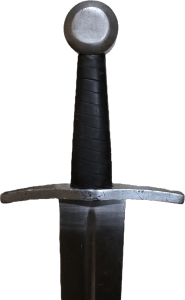
Description: A single-handed, straight, double-edged sword often used with a shield.
Used: Circa 11th–15th centuries (High to Late Middle Ages).
Why Learn: Great for studying knightly combat and foundational techniques with single-handed sword styles.
Primary Historical Sources: I.33 Walpurgis, Fiore dei Liberi, Hans Talhoffer, Paulus Kal, Bolognese Tradition (Marozzo, Dall’Agocchie)
2. Longsword
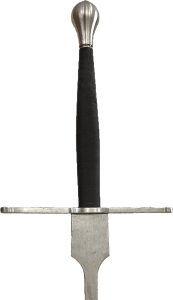
Description: A two-handed, straight, double-edged sword built for powerful cuts, thrusts, and versatile grappling techniques.
Used: Late 13th–16th centuries.
Why Learn: Core weapon of HEMA; teaches structure, timing, leverage, and historical martial principles.
Primary Historical Sources: Fiore dei Liberi, Johannes Liechtenauer tradition, Peter von Danzig, Ringeck, Talhoffer.
3. Sword and Buckler
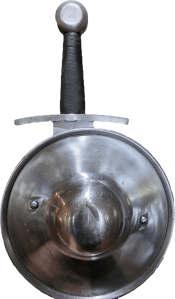
Description: A single-handed sword paired with a small hand shield (buckler) for deflection, control, and tight defensive structures.
Used: 12th–16th centuries.
Why Learn: Excellent for coordination, off-hand engagement, centerline control, and fast-paced fencing.
Primary Historical Sources: MS I.33, Paulus Kal, Talhoffer.
4. Rapier
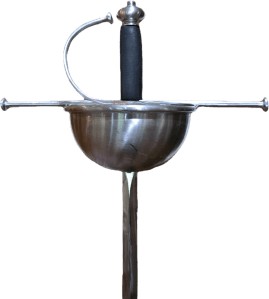
Description: A long, slender thrust-focused civilian dueling sword with complex hilt.
Used: 16th–17th centuries.
Why Learn: Develops precision, measure control, geometry, and sophisticated fencing concepts.
Primary Historical Sources: Capo Ferro, Fabris, Giganti, Thibault.
5. Messer
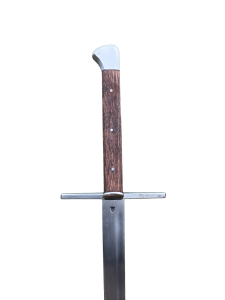
Description: A single-edged, single-handed cutting weapon with a slight curve and knife-like construction.
Used: 14th–16th centuries.
Why Learn: Emphasizes strong cutting mechanics, winding, and close combat techniques.
Primary Historical Sources: Lecküchner, Talhoffer, Mair.
6. Rapier and Dagger
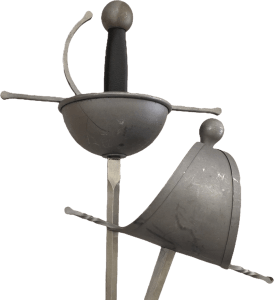
Description: A pairing of a rapier in the dominant hand and a defensive dagger in the off-hand.
Used: 16th–17th centuries.
Why Learn: Trains dual-hand coordination, line control, and historical dueling methodology.
Primary Historical Sources: Capo Ferro, Fabris, Giganti.
7. Smallsword
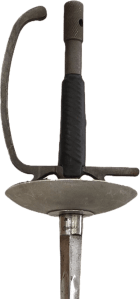
Description: A lightweight thrusting sword used in civilian duels and courtly self-defense.
Used: 17th–18th centuries.
Why Learn: Sharpens precision thrusting, refined footwork, and elegant fencing principles.
Primary Historical Sources: Angelo, Girard, Hope.
8. Quarterstaff / Longstaff
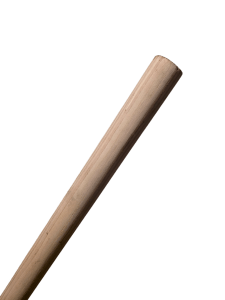
Description: A long wooden staff (6–9 ft) used for striking, thrusting, and grappling at extended range.
Used: Medieval through Early Modern periods.
Why Learn: Develops structure, footwork, timing, and full-body power generation.
Primary Historical Sources: George Silver, Paurenfeyndt, Mair.
9. Spear
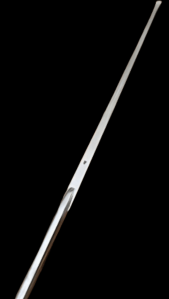
Description: A long polearm with a thrusting point; sometimes features wings or side lugs.
Used: Throughout the medieval and Renaissance periods.
Why Learn: Ideal for studying reach, line control, precision thrusting, and historical battlefield principles.
Primary Historical Sources: Andre Paurenfeyndt, Paulus Hector Mair, Fiore dei Liberi.
10. Halberd
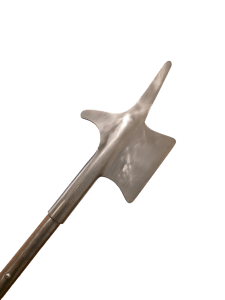
Description: A polearm with an axe blade, thrusting spike, and hook for grappling.
Used: 14th–16th centuries (especially 15th c.).
Why Learn: Excellent for battlefield technique study, combining cutting and thrusting with polearm mechanics.
Primary Historical Sources: Paulus Hector Mair, Joachim Meyer.
 Whidbey Swordplay Association
You must be logged in to post a comment.